
What the heck are these things?
A quick, no-nonsense primer on the jellyfish you'll run into along the Atlantic coast — what they are, how the sting actually works, and which ones matter where you swim.
Who's in your water
The cast changes as you move up and down the coast. Pick your stretch.
- Atlantic sea nettleChrysaora chesapeakei / quinquecirrhaPainful stingJun–Sep
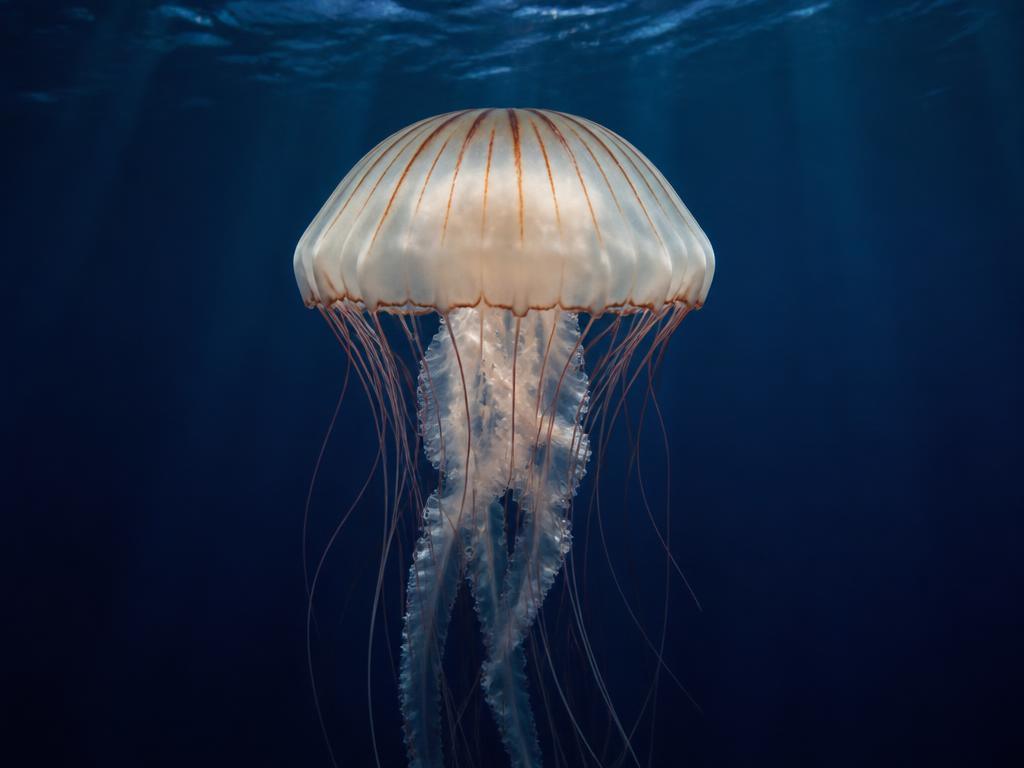
Milky white saucer, sometimes with faint red-brown radial stripes, trailing four frilly oral arms and a curtain of thin tentacles.
The classic mid-Atlantic sting: instant burn, red welts in a whip pattern, easing over 20–60 minutes.
Bell 4–8 in, tentacles up to 3 ft
- Moon jellyAurelia auritaMild stingMay–Oct
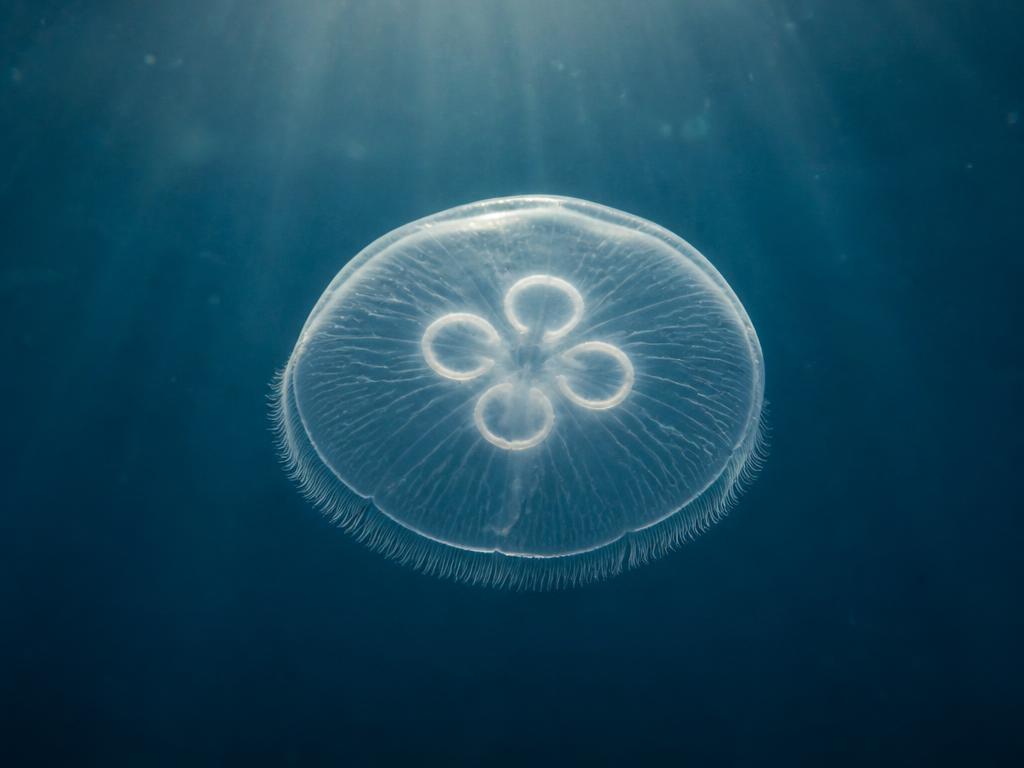
Clear glassy disc with four pink or violet horseshoes (its gonads) in the middle, and a fringe of very short tentacles.
Barely registers on most skin — a faint prickle at worst. Sensitive spots like lips and inner arms can react.
Bell 6–15 in
- Lion's mane jellyCyanea capillataPainful stingApr–Jul
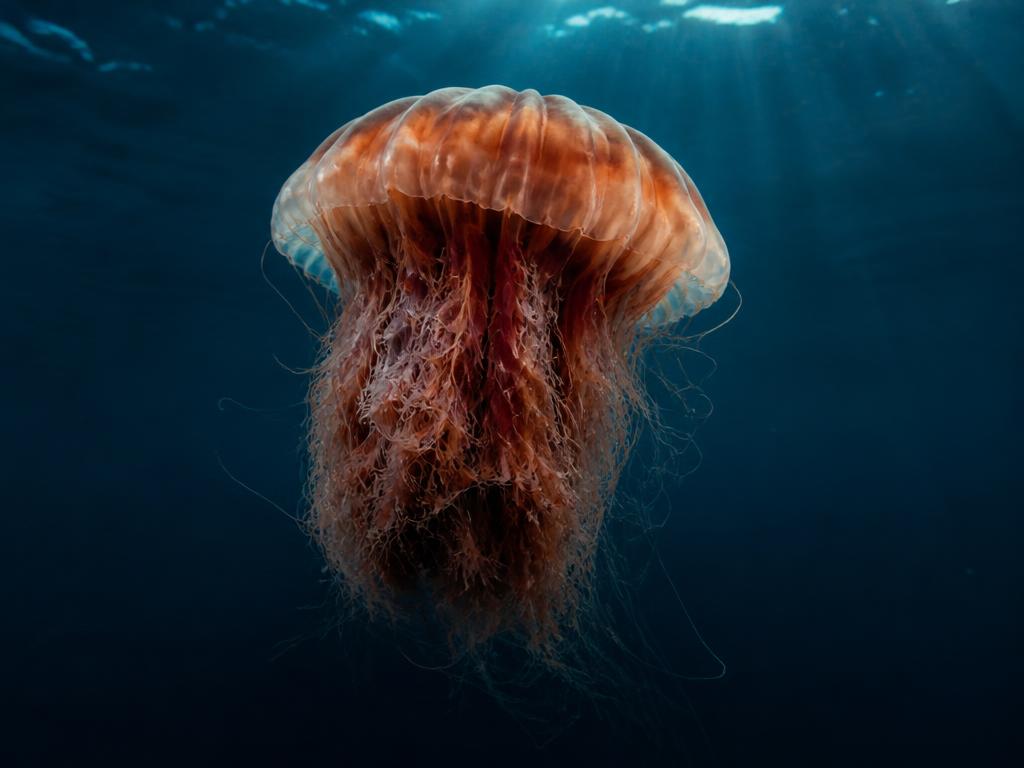
Rust, amber or maroon bell with a thick, shaggy mane of hundreds of fine tentacles hanging beneath it.
Long-lasting burn and welts. Detached tentacle fragments in the surf still sting for hours.
Bell 8 in to over 3 ft up north
- Portuguese man o' warPhysalia physalisSevere stingOct–Apr
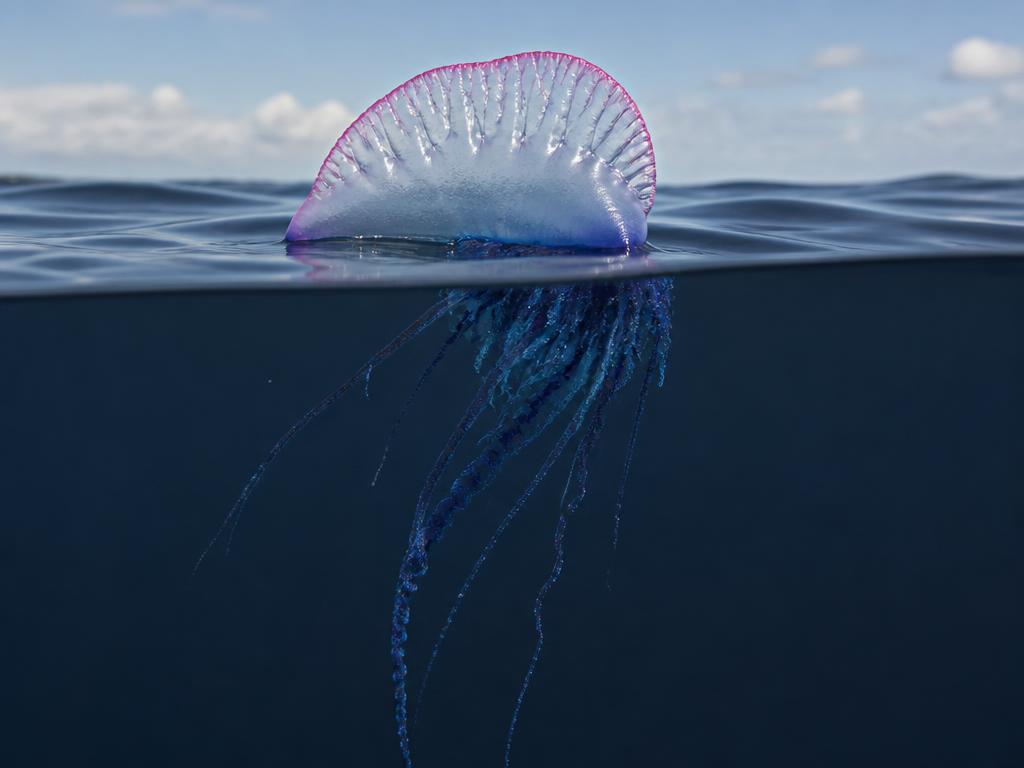
Not a true jellyfish but a colony: a blue-pink gas float that looks like a plastic bag, with a single very long fishing tentacle.
Severe, whip-like pain that can spread. Systemic reactions happen. Seek help for chest pain, trouble breathing, or a large sting area.
Float 4–12 in, tentacles 30 ft or more
- Comb jellyMnemiopsis leidyiHarmlessApr–Nov
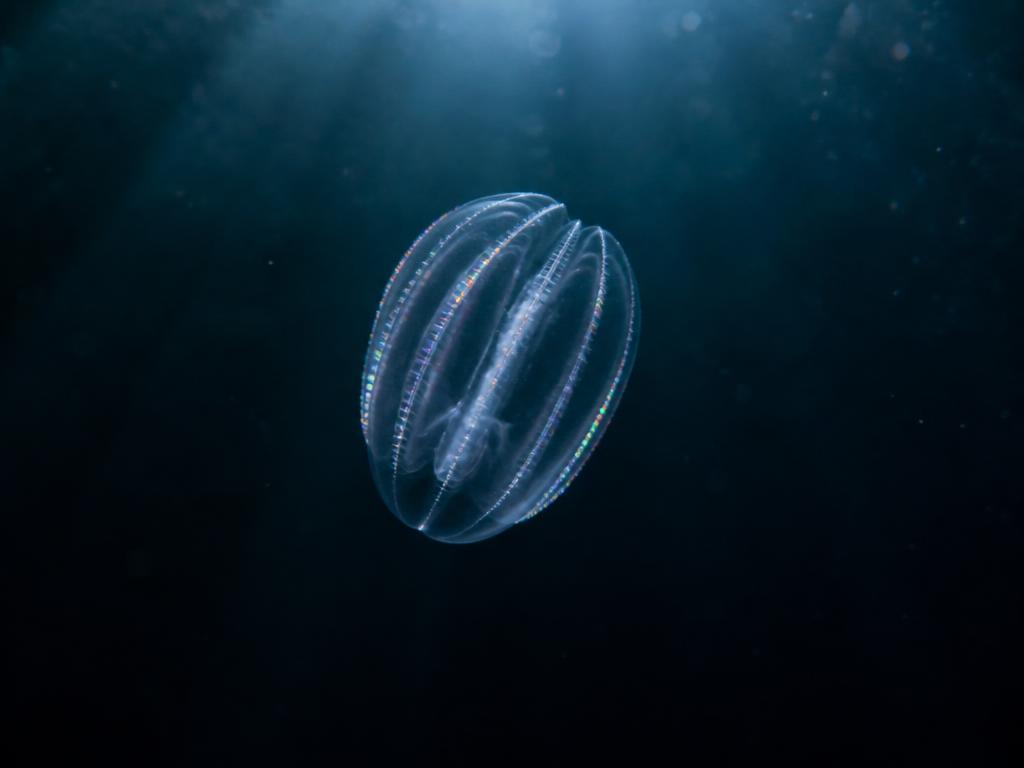
A clear walnut-shaped blob with eight rows of beating cilia that flash rainbow colors in sunlight.
No stinging cells at all. Completely safe to hold.
1–4 in
Photos are illustrative references, not photos taken at your beach.
What a jellyfish actually is
A jellyfish is about 95% water. No brain, no heart, no bones, no lungs — just a bell-shaped body, a simple nerve net, and trailing tentacles. They're one of the oldest animals on the planet, drifting around long before dinosaurs showed up.
They barely swim. The bell pulses to hold position or rise and fall, but where a jelly ends up is decided by tide, current, and wind. That's why a beach can be clear in the morning and full of nettles by afternoon — they got pushed in, they didn't come hunting.
The one you'll meet in Ocean City is the Atlantic sea nettle. It's a plankton eater, drifting with tentacles out to catch tiny organisms. You are far too large to be food.
How the sting works
Tentacles are lined with microscopic stinging capsules called nematocysts. Each one is a coiled, venom-filled harpoon on a pressure trigger. Brush against it and thousands fire at once, injecting venom into the top layers of your skin. That's the instant burn and the red, welted line.
Critically: this is mechanical, not a decision. The jelly isn't attacking you and doesn't need to be alive. A broken-off tentacle drifting in the surf, or a jelly washed up dead on the sand, will still sting on contact. Don't poke beached jellies, and be careful where kids step.
It also means the goal of first aid is all about stopping unfired capsules from firing, which is why the order of steps matters more than what's in your beach bag.
Season, weather, and why the bay is worse
Sea nettles want three things: warm water, calm conditions, and the right saltiness. Numbers build through July, peak from late July through September, and drop off as the water cools in fall.
- Hot and still means more nettles. A stretch of hot, low-wind days lets them build up near shore. Big surf and strong wind break them up and scatter them.
- Rainfall matters. Sea nettles like brackish water — not fresh, not full ocean strength. A dry summer pushes the ideal salinity zone around and can bring them closer in.
- Bay side usually stings more. The coastal bays behind the island are warmer, calmer, and brackish — near-perfect nettle habitat, and where they breed. The ocean side gets what the tide and wind push in. That's why every report on this site is tagged ocean or bay.
- Nettles often arrive in patches, not evenly. Two blocks apart can be completely different — which is the whole point of the map.
Nettle or moon jelly? Quick call
- Long trailing tentacles under the bell → sea nettle. Keep your distance.
- Short fringe, flat clear disc, four rings → moon jelly. Harmless.
- Rainbow shimmer running in lines → comb jelly. Harmless.
- Blue balloon on the surface → man o' war. Get out and tell a lifeguard.
- When you can't tell, treat it as a nettle and give it room.
Myths worth dropping
- "Rinse it with fresh water." No — fresh water changes the pressure balance and makes leftover stinging cells fire. Rinse with seawater.
- "Pee on it." No. It doesn't work, and depending on its makeup it can trigger more firing. It's just an unpleasant myth.
- "Rub it with sand or a towel." No — friction fires more capsules and grinds venom in. Lift tentacles off with a card edge or tweezers instead.
- "Dead ones are safe." No. Beached and broken jellies sting fine.
The actual first-aid sequence — seawater rinse, remove tentacles, baking soda slurry, heat — is in the Soothe the Sting.
General information only, not medical advice. See Legal & disclaimer.